
[Distortive and false reporting of the war] is frightening to me, because it often gives me the feeling that the very concept of objective truth is fading out of the world. After all, the chances are that those lies, or at any rate similar lies, will pass into history… and schoolchildren will learn about it generations hence.
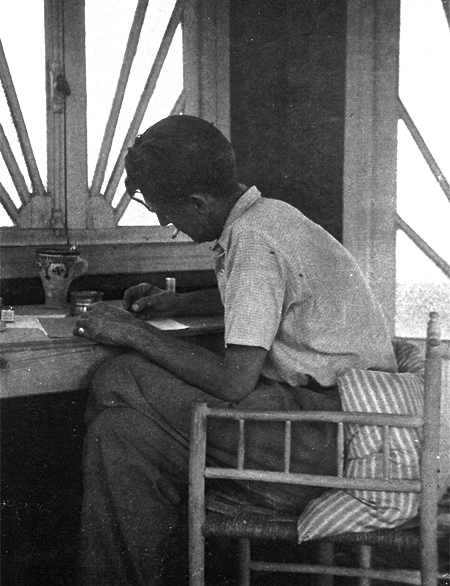
George Orwell – Essay, Looking back on the Spanish War
At the invitation of the local University of the Third Age group, I delivered a talk entitled “Troubled Memory – Italy and the Second World War” in Dun Laoghaire/Glasthule this June. Introduced by the former Irish Ambassador to Italy, Colm Ó Floinn, and with an audience of many eminent individuals I was kept on my toes – but it turned out to be an engaging and lively morning.

I drew much of my talk from my 2019 book, The Bicycle Thief and the German Wife, and the 7 years research to complete it. This book originated from a story snippet my mother-in-law once told me. Her father, Bruno, had been released from a prison camp in Germany in 1945. But unwilling to await months for repatriation, he and a fellow-soldier had stolen bicycles and cycled home along dangerous roads to Italy.
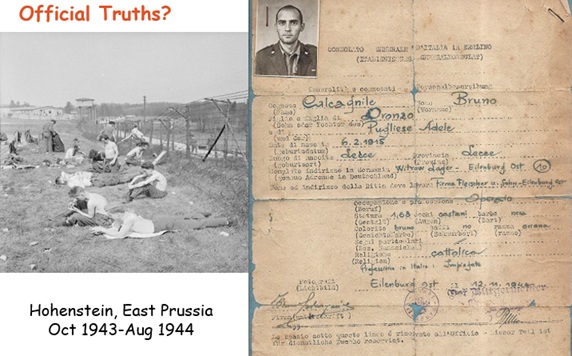
She knew little more about him except that when he died in a road accident a decade after the war, accusations that he had been a fascist were used to deny his widow the proper war pension. Besides that, he once told her as they played with her toy airplane that he had made real airplanes during the war. (He had, I later found out. But that was as a forced labourer in a German factory under Allied bombardments in 1944/45.)
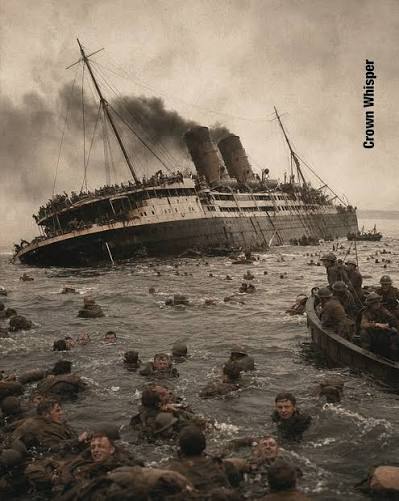
This June, once again I learnt more from the audience than they probably did from me. An older woman afterwards shared with me the snippets of family history she knew. Born in an Italian family living in Scotland, several of her uncles were interned as enemy aliens in 1940 and shipped to prison camps in Canada. Thankfully they were not on the SS Arandora, sunk by a German U-Boat in 1940, leading to the drowning of 470 of the 700 Italian internees onboard bound for Canada. However, now, more than 80 years since the events, she was trying to trace what had happened to them during the war. There were no living relatives left she could now call upon.
Like many teachers, I often impress upon students the urgency to question and gather the stories of their older relatives. I used the Orwell quotation above at the start of my 2019 book. But with our deluge of information, so much of it “lies” as Orwell tells us, now being AI churned out as objective history, what happens if even the slivers of family stories are just not retold or even known.
It took me 7 years to discover that Bruno wasn’t a fascist – even if his family were. I wished that Scottish-Italian lady well in her endeavours. At least I had people living I could talk with. But of the 7 alive when I started only one remained when I concluded that book 74 years after the war. With each passing year there is less hope for objective truth, as Orwell so sorely realised.

So old-fashioned I know, but please keep repeating – “young people, please ask your elders for their stories”. They’re often the best legacy we’ll ever receive.

