School Creativity (Book) Programme – 6 Steps To Get Started

This article is based on experience over 5 years of developing a Creativity Programme in two Secondary Schools in Ireland. The end result is a Creativity Book (developed in both electronic and hardcopy). Weblinks to these ebooks are given below.

I welcome ideas and suggestions from other school communities on how to adapt and develop our creativity programme. Please email me on paulmartinwriter@gmail.com

CCM Creativity Book 2025 Cover

Background

Human creativity distinguishes us from AI. It develops self-expression so important for social skills and well-being. It facilitates new perspectives, so important in problem-solving in every workplace (including those based on apprenticeships) and in every walk of life. It’s important to show students that creativity is not “just for the clever, arty people”. Creativity, whatever its form, just makes life better and more enjoyable.

My idea for a school Creativity Book began in 2021 during Covid. My focus was to support mental health by enabling students to give voice to their thoughts and feelings during this difficult time of isolation. The format was kept simple. A book of student poems accompanied by web-sourced images in ebook format for easy social media distribution.

Over the next five years this format progressed to a Creativity Book in both print and electronic versions. All poetry and art content is produced exclusively by students (short stories rarely stand out and seem not best suited to format). The only non-student content exception is a “My Favourite Creation” section where two teachers from diverse subjects describe their own favourite written, visual, musical or physical creation.

6 lessons – Developing a School Creativity Book Programme.

1. Establish a creativity culture (Target first years) 

Experience has shown that the best target groups for the Creativity Book are first years (aged 12/13) followed by 4th Year/Transition Year (aged 15-17). Third, fifth and sixth years are focused on academic studies. Second years are often more self-conscious and “cooler” than first years meaning they are less inclined to stand out from the crowd and express their personal experiences.

Honing in on students entering the school also signals that creativity is highly valued and central to “our school” and the secondary school experience. It’s “what we do” and helps to embed a creativity mindset in students for their following 6 years of school. The prestige given to creativity is reinforced through the year/end Creativity awards presented at the annual prize event.

Linking in so actively with 1st Years facilitates re-engagement with students in any year but especially in Transition Year. Students by then know the process and the relevant teachers and regularly submit, or are encouraged to submit, writing or art content towards the Creativity Book.

2. Enable students of all ability to participate (Recognise the doodlers!)

How can students with literacy or learning challenges be fully supported to contribute to a creativity book? Just look at their copybooks! Many students – some with literacy issues, some without – do wonderfully artistic doodles and drawings in their class copybooks. So give them free rein

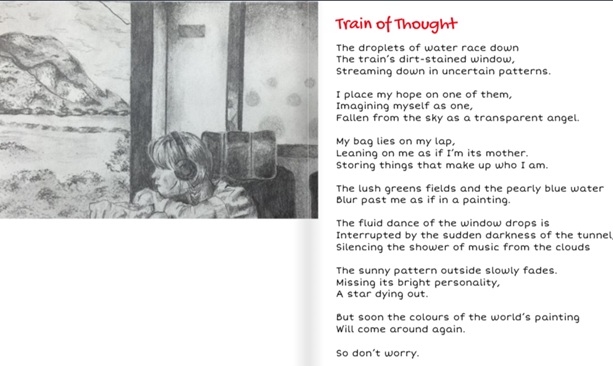
We invite student to submit written and/or artistic work. This idea was inspired by both this doodling and the poet Paul Durcan’s 1987 book “Crazy about Women”. In this, he wrote poems inspired by paintings in the National Gallery in Dublin. The poem and painting were reproduced side-by-side in the finished book.

So we decided to simply reverse the process. Ask students to write a poem and then engage students in art class to produce a visual image inspired by it. This led to the participation of many more often less confident students – for example, those with dyslexia, or who might view themselves as of lower academic achievement.

This one change, in the third year of the programme, opened doors to expression for many more students, increased creativity content 50% (all the art work is theirs) and resulted in a highly visually appealing book being produced.
3. It’s teamwork, not a solo run (Share the credit)

Just as the content is all about students, the book will only happen with the buy-in of many busy teachers. So make it as easy as possible to engage with by sharing templates and examples (see point 4 below). Say thanks. Mean it. And keep saying it. Recognise their essential work in the book’s introductions.

4. Get them started with ideas (Share possible topics)

So how does a teacher help a student to write a poem if they’ve never done it before? Start with listing possible topics connected to their own lives, for example:

  • Sports/Activities: soccer, rugby, GAA, horse- or bike-riding, skateboarding, video-gaming etc
  • Animals: Dogs, cats, crab, horse, bees, foxes, fish
  • People close to them: Parent, sibling, grandparent (occasionally one passed away), friend
  • Seasons/events: Summer, Christmas, Autumn, Halloween
  • Family home countries: Challenge students, especially those with origins outside the country, to write about summer visits to family and places abroad. 
  • Places: Mountains, beaches, hometown, school, bedroom

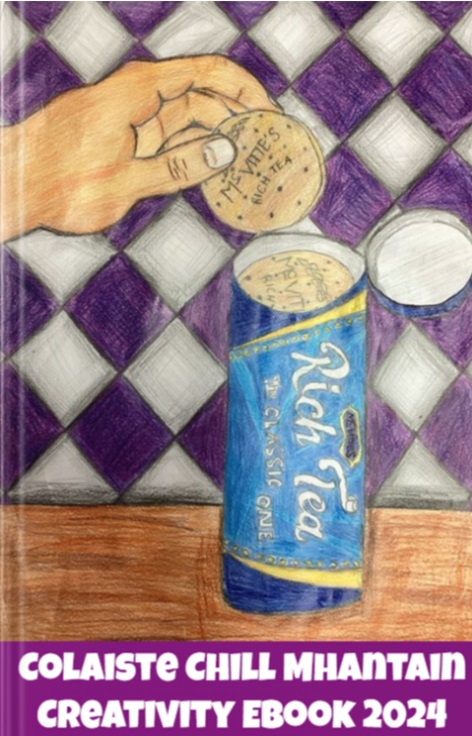
Then reveal the supermodels! Show them poems written by students in previous years. Students enjoy recognising names of older siblings and students as the ebook is displayed on screen. It makes creativity just normal. What’s so strange or daunting about writing a poem if those older students in my neighbourhood did it? Well, so can I!
5. Gather sufficient quality content (Be a magpie)

Creativity doesn’t just happen in the formal class setting. You might struggle to find enough suitable art pieces to accompany a poem, or vice versa. So be a magpie.

It’s impossible to try to bring together all the creativity happening in any school. But you should always have alert antennae for so many of rich pickings available in every corridor, class and canteen area. Short of an image for a certain poem? Ask a student you know interested in art and might use other forms e.g. computer art design.

Some creative pieces have entered our books through odd channels. A vivid description of a pizza slice passing through the human digestive system was first written for a science class. An under-the-radar “artist” was spotted notebook doodling in the canteen. Earwigging in the staffroom unearthed a winning art piece originally produced for a history local-heritage project. Other pieces were spotted from exhibitions posted in the library, art classes and school corridors.

6. Don’t crash on launch (Promote and promote again).

Many students and teachers put huge work goes into the Creativity book. Don’t let it die a death as a one-day (school announcement) wonder. Use Social Media post-launch to keep it front and centre over several weeks. Share a “Poem of the Week” (with accompanying image(s) throughout April and May on school social media. (See Apr-May in the timeline below). Chose that week’s poem/art piece to connect with the calendar e.g. a summer poem when the weather is nice, a sports poem if there is a big school cup match, a travel/foreign poem if the school just back from mid-term etc. You don’t need to promote a “weekly poem” every week but 4-6 can easily be should in the final two months of school.

Timeline

Remember the golden rule of project management. Work backwards! If you want the book concluded, as I do, by St Patrick’s Day (March 17th) what actions need to happen before then. My rule of thumb is:

  • Oct, week 1: email all relevant English teachers (1st yrs classes) with support material (links to past creativity books, PPT with poetry/art examples, one page jpeg explaining “competition/challenge” for teachers to post on class Teams or Google page). Set mid December deadline for poem writing.
  • Mid November: Remind/prompt English teachers “casually” in the staffroom. Follow up with email.
  • Early December: Send reminder email to English teachers, if required.
  • December: Engage with individual teachers to ensure students type up poems selected from original submissions.
  • Early Jan: Share and discuss selected typed poems with lead teacher in Art Department
  • Jan/Feb: Begin drafting and formatting the book. (I use bookcreator.com). Continue to engage with art department for appropriate images to accompany poems.
  • Feb: Draft Principal’s Introduction/request Principal’s Introduction for Mar 10th deadline
  • Mar: Gather and chase all materials. Complete ebook in advanced draft.
  • Mar/Apr: Depending on Easter date, launch ebook through school social media and English 1st year tutor groups two weeks before Easter. Request quotations for hardcopy printing. Select printer. Send proofs to printer
  • Apr-May: Distribute hardcopy book to every student selected for inclusion in book. On school social media share Poems of the Week with accompanying image(s). Connect these poems with the weather (e.g. summer poem), national or school events (e.g. sports successes). A poem is not necessary every week. But 4-6 should be shared.
  • May: Present Creativity Awards at year end school presentation day for Poetry and Art. 

Links to School Creativity ebooks

Coláiste Chill Mhantáin Creativity Book 2025

Coláiste Chill Mhantáin Creativity Book 2024

Coláiste Chill Mhantáin Creativity Book 2023
Coláiste Chill Mhantáin Creativity Book 2022

Woodbrook College Creativity Ebook 2021

6 Reads – Out of this world

I was down in my local, Greystones Village Bookshop, last week to ask about the two dozen copies of my books I left with them before Covid. Seems all have been sold. This hardly makes me a remarkable writer however. Book sales are booming. More than 13 million print books were purchased in Ireland in 2021, the 7th year in a row of growing sales. Indeed, Dubray books recently opened another two shops in Dublin.

As menacing events, strident opinions and shocking facts are pinged incessantly at us, is it any wonder people are returning to books and the solace of human stories. Like mythology, novels helps us to make sense of our lives and emotions and to explain who we are to ourselves.

Walking back from the Village Bookshop, I mulled this over and wondered what half dozen novels I’d suggest to readers (aged from mid-teens to 100) to draw them back into our imaginative worlds. In choosing them I applied three criteria:

  1. No politics or history: Ostensibly none could include politics, economics or great historical events
  2. No technology: No mention of technologies beyond telephones (usually a plot device anyway).
  3. Self-contained worlds: Each novel should spirit the reader away, to inhabit another world where heightened senses see and feel everything as if for the first time. (On reviewing my selection, strangely I found that love, or lost love – of all kinds – were at the heart of each story.)

Here are the chosen six

  1. Le Grand Meaules (1913), Alain Fornier

Chronology neatly places this at the top of the list but it would probably have been here anyway. The only novel of Alain Fornier, a young French writer killed at the start of World War One, it brings alive Francois’ young life following the arrival of the older boy, Meaules, as a pupil into the small village school run by Francois’ teacher father. Meaules yearns to find again the elusive chateau where he once experienced a magical carnival hosted by a beautiful young girl, Yvonne, who lived there with her widowed father. The search dominates the novel. Tantalising beauty always seems just beyond reach. This is a really special book.

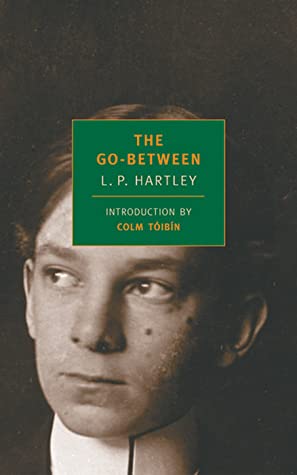
2. The Go-between (1953), LP Hartley

This novel inspired Ian McEwan to become a writer on reading it aged 14. He freely acknowledged it as the background to his novel, Atonement. It centres on a single summer of glorious sunshine in 1900 when 13 year old Leo is invited to spend the holidays with his more affluent and not especially close school friend. What Leo is drawn into and how he acts as go-between in relationships is only truly understood in later years on reading his diary from that youthful summer and reflecting upon the chain of events and their human consequences which he unknowingly enabled.  

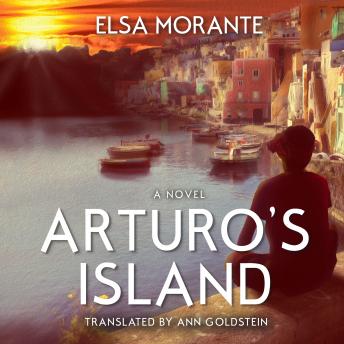
3. Arturo’s Island (1957), Elsa Morante

A close Italian friend once gave me Elsa Morante’s La Storia, a novel revolving around the lives of a half-Jewish single-mother, her two sons (and their dog) in Rome during the Second World War. Meaning both “story” and “history” in Italian, it languished on my shelves for twenty years until I read it last summer. My friend certainly knows me and how I tick. She chose well. This brought me to stumble upon l’isola di Arturo, or Arturo’s island. (Tim Parks, who has lived, written and translated in Italy for many years included it among his 5 favourite Italian books.).

The novel describes Arturo’s bohemian and utterly free existence as a boy on a small island off the bay of Naples sometime (it seems) in the 1930s. After his mother’s early death, his strikingly beautiful and most unusual father disappears off the island for long unexplained periods leaving Arturo in the casual care of minders. That is until one day, when Arturo is 14, his father returns to the island with his new 16-year-old Neapolitan bride. As his life is hermetically sealed on the island, Arturo’s every sensation is freshly experienced untainted by the instruction and conditioning of others. An otherworldly but fascinating book.   

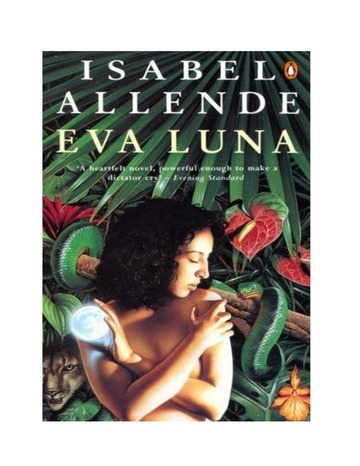
4. The stories of Eva Luna (1991), Isabel Allende

This book of short stories enjoyed huge success when published. Much less “rambling” a magic-realist than Gabriel Marquez in for example One Hundred Years of Solitude and certainly less esoteric than the otherwise fascinating Jorge Luis Borges, these stories sweep you up into other worlds. Very sensual (and at times sexual) though never frivolous, the stories recount loves, events and emotions with a freshness and vividness you sense the characters may themselves be experiencing.

5. The Road (2006), Cormac McCarthy

Not all these books leave a smile on your face or have you reaching back into youthful memory. Some, including this, can scare the wits out of you. I don’t mean Hollywood horror stuff, I mean stripping everything back to viscerally-felt experience. It’s a similar impact as when reading Philip Larkin’s poem Aubade. As a reader you think “it’s stark, microscopic and terrifying but I could feel and see things this way” even if things are utterly different to anything you’ve encountered before.  

And despite all the awfulness, at the core of this novel is a love, a desperate love, between a father and his child.

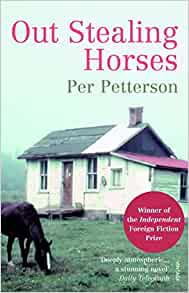
6. Out stealing horses (2007) Per Petterson

The most recently published of these half dozen self-contained, other-world novels of imagination, Out Stealing Horses by Per Petterson is meditative and unexpected, hinging upon the memories and experiences of an old Norwegian man in his final years. It won the Dublin Literary Award. Their award description is worth the read.

This list hopefully sends you back to the shelves and to dive deeply again into the treasure chest of human stories. Exercising the imagination is as important as exercising the heart. So this summer why not turn off the pings and turn over the pages instead!

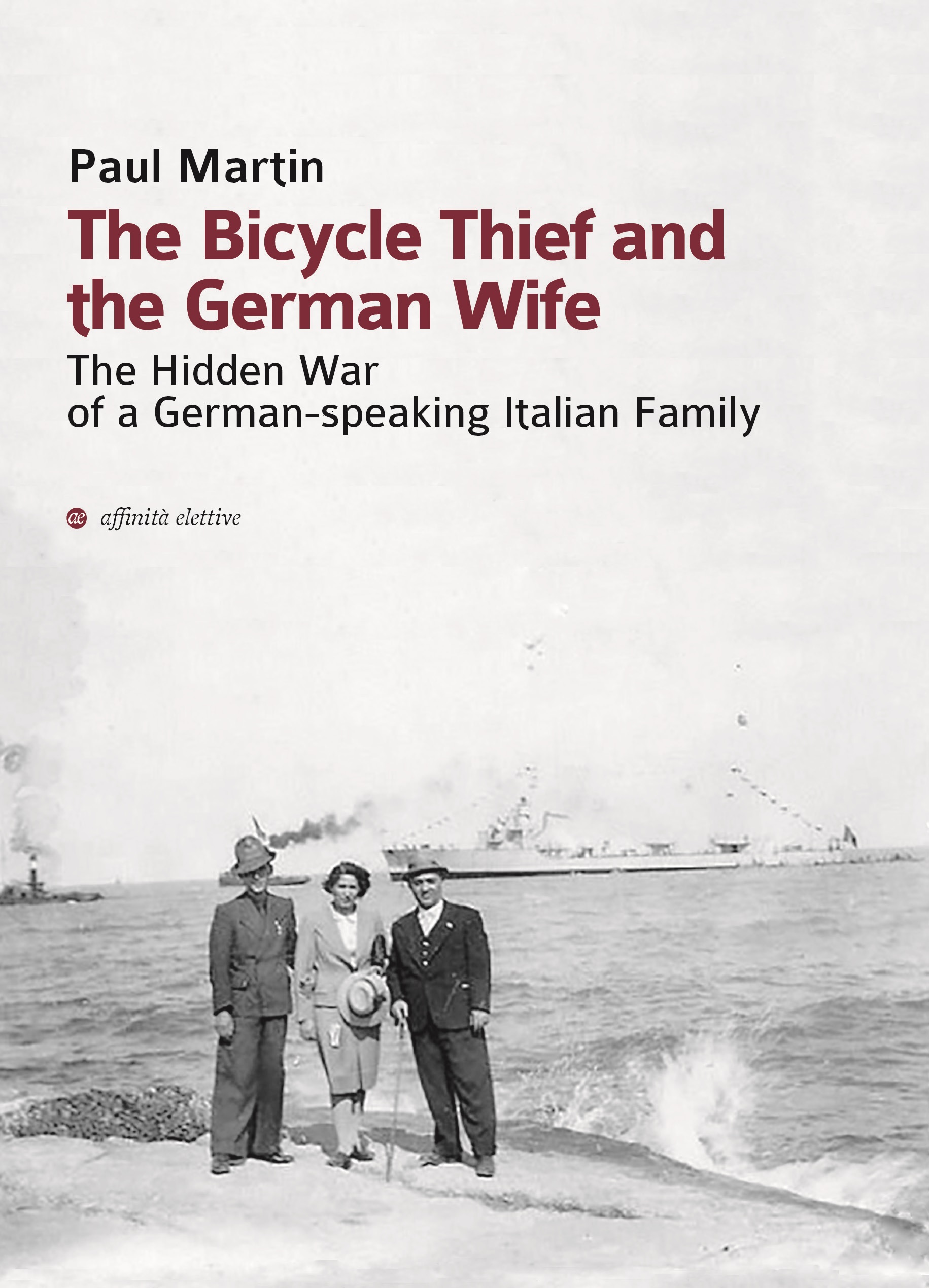
Translating “The Bicycle Thief…”

As I outline in my introduction, The Bicycle Thief and the German Wife (TBT for short), is in essence a tapestry of many very human stories. It seeks to give a vivid sense of what life had been like – not just for the two central figures of Bruno and Babi – but for countless other Italians from all sides swept up in the maelstrom of the Second World War. It also considers some of the consequences which lingered on in the lives of Italian families for many decades afterwards.

Every author writes to be read. But in the case of TBT the readers I especially had in mind were younger people, those born at least a half century after 1945.

It is therefore a great pleasure to continue my relationship with Ms. Valentina Foschi, the teaching staff and the students of the Liceo Nolfi Apolloni in Fano, Italy. In recent years, Valentina has invited me as key speaker to a number of seminars for teachers, educational professionals and students in this beautiful town in the northern Marche region.

I will now be working in collaboration with many students in Liceo Nolfi on a translation project of TBT. I look forward to their response as young people to the story and to learning from them, Valentina and her highly professional colleagues.

To Read or Not to Read – What is the Question?

Rereading Harold Bloom’s 1994 The Western Canon this week. Not shy about speaking his (immensely well stocked) mind, it caused quite a stir at the time. It still does.

His basic question is: with each of us having only one lifetime and with a world of books out there, which ones should we read and how should we read them?

Simple surely? No unfortunately. It never is and it never has been.

WEstern Canon

Going through the chapters I’m struck again by a comment the president of an Irish seminary said to me a few years ago. (I had no affiliation to the institution. I was simply there as a paid consultant). “For a young person to enter religious life now is considered radically counter cultural. It goes completely against the prevailing beliefs of most people in society. But in the 1960s when vocations in Ireland were at their peak, the counter-culture meant Bob Dylan. Now he’s an institution and we’re the ones going against the tide!”

Bear with me on this one. Don’t troll me for seeming to give airtime to a “bigoted” counterview just for a moment.

Bloom was pilloried for advocating a Western Canon of writers composed almost exclusively of dead, white (European) males. Challenging himself to condense the canon to a baker’s dozen he named Homer, Virgil, Dante, Chaucer, Shakespeare, Cervantes, Montaigne, Milton, Goethe, Tolstoy, Ibsen, Kafka and Proust.

dead white males

In this book and throughout his career, Bloom, a Yale professor and son of a garment worker, held firm to the idea that literature should be assessed according to its aesthetic quality rather than its social context. In simple terms – was the writing art good regardless of who wrote it or if it said the “right” things.

A cracking debate on the two fundamental and opposing views of modern literary theory took place in 1999 between Bloom and Professor Jacqueline Rose on Melvyn Bragg’s BBC radio programme, In Our Time. https://www.bbc.co.uk/sounds/play/p00545dp. In the latter part of the debate Bloom came across as pompous, patrician (patriarchal?) and, in my view, Rose’s poise and especially her observations on Shakespeare gave her the upper hand.

For Bloom, Shakespeare is undoubtedly at the centre of our western literary canon. But Rose asked which female Shakespearean character, except possible for Portia in The Merchant of Venice, is strong and substantial? Are they not otherwise all accommodating maidens and counterfoils? How do they inform and reflect the experiences she feels as a woman?

All Professor Rose’s points were well made and convincing. But Bloom always held firm to his deep views on literature. He rallied against what he thought was the sinking of real literary studies (“imaginative literature”) into the morass of “cultural studies” departments. Bloom contented that “great literature will insist upon its self-sufficiency in the face of the worthiest causes: feminism, African-American culturalism, and all the other politically correct enterprises of our moment.” Every great writer is a law onto him/herself and “is out for himself alone and will frequently betray or neglect his class in order to advance his own interests, which center entirely upon individualisation”. 

literarycriticism

These observations will strike home for anyone who has studied English in college in the last 30 years. I recall one of those endless undergraduate lectures on literary theory and the moment my young heart sank like a stone. This was just before The Western Canon was published. Was the dreary theory lecture on structuralism, post-structuralism, Marxism, feminism, French feminism, post-colonialism, new historicism, deconstruction or formalism? I really don’t remember. But I do remember the “moment of truth”. “You know” the chirpy lecturer informed us “for a deconstructionist critic Shakespeare and a superman comic are of equal literary quality and value. It’s all just a question of how you approach the analysis”.

So what’s was the point? What was I studying? Was it an academic’s PhD thesis or was it the writing of a great mind and original artist. Did I care unduly if the writer was of a certain colour, nationality or background?

Every year interest in studying Arts in Irish universities declines. What is it that will fan the flame of interest in books among young students? In the opening chapter of the Western Canon Bloom states “we are destroying all intellectual and aesthetic standards in the humanities and social sciences, in the name of social justice”.

Do the universities offer students the opportunity to really develop authenticity, creativity, independent-thought and critical expression – all attributes seen by even the most hard-nosed careerists as essential in today’s lives. Do schools and universities provide a place for the study of the life-enhancing humanities or is it just social theory?

As a parent or teacher, how can we inspire a child to read and learn with curiosity? It’s not easy. Especially as Bloom contented that to grasp the Western Canon in a meaningful way would involve the reading, rereading and contemplation of more than 3,000 books – something all but impossible in one lifetime. (In many ways I’m old-school and I consider myself well read. And I’ve still only managed about half of that number).

We live in a fraught age when literature can help us so much in our personal and professional lives. But with each screaming headline prompting anger, indignation and anxiety and social media gobbling us our every waking hour, where is the physical and head-space to read?

So let’s go back to the basic question. Why would a young person read and re-read? Is it not, as it has always been, for the story? And then for its writing quality and artistic originally? (Something once called “aesthetic quality”. Something, for example, abounding in a book like Wuthering Heights.)

Bloom died only a few months ago – in October 2019. But maybe the old curmudgeon might have had a important point to make to us after all?

Read him yourself. Then you decide.

harold-bloom-1994_icajdm

What’s Your Covid Read?

First Posted: March 20th 2020

It’s an unpredictable and difficult period for us all. Self-isolation (for those of us lucky enough to do so) isn’t easy. And we’re only just getting into it. This will extend for weeks. Cabin fever will soon take hold! So let’s take care of ourselves.

People are using social media to stay connected, support each other and to suggest good ways to spend this time. Looking to the positive, we now have the unique time and mental-space to read (or re-read) a book that we’ve long had “on the list”. So rather than just scroll and watch screens, why don’t we read “that book” and share our thoughts on it?

I first read War and Peace 20 years ago and I’ve been meaning to go back to it for at least two years. Something always got in the way. 300 pages into re-reading it, here are my five thoughts for those who might be interested in Tolstoy’s classic.

20200323_145207
  1. Give it a chance (it’s a gripping read)

It’s up there with the classics everyone knows but few of us have read – or at least have got no further than chapter two. Who gets past the “snot green sea” Stephen Dedalus describes from the martello in Ulysses, or the tilting at windmills in Don Quixote, or – for the more adventurous – beyond Swann’s Way in Proust’s enormous tome?

The challenge for most people about War and Peace is not its length (my copy has 1,345 pages!) but its panoply of characters. They seem endless! But just remember that the three central characters are Pierre, Andrew and Natasha, and that the Rostovs and the Bolkonskis are the most important families. That way you can’t go too far wrong.

Because like other lengthy Russian masterpieces – Anna Karenina, Crime and Punishment or Vasily Grossman’s Life and Fate – once you get into it War and Peace it really is a page turner.

  1. Life is unpredictable (and it always has been)

If my house ever goes on fire, there are only two books I’d save. My collected Yeats, signed for me by his daughter, Anne, and son, Michael and my 1942 US edition of War and Peace.

Spine

I picked up my copy from one of the wonderful second-hand bookshops in Berkeley when I lived in San Francisco in the late 1990s/2000s. What makes this 80 year old Simon and Schuster edition so special is when it was released. In November 1941, months before the Battle of Stalingrad, nobody (including the publisher) knew if the Germans would, like Napoleon, succeed in driving and destroying all before them to reach Moscow.

Maps of both campaigns – Napoleon’s and Hitler’s – literally bookend the edition. The backcover map shows the terrifying “Farthest Line of Advance” in red to indicate Hitler’s position by the time of the book’s release.

Nazi 1942

It seems to say: “We don’t know how these tumultuous events they will turn out. But similar experiences have happened in past centuries.” Illustrating how calamitous events were experienced in the moment by those in the past, helps us to endure in the present.

Isn’t that one of the values of great literature?

  1. You’re in for a treat (if you’ve never read Tolstoy)

And on that note….if you have never before read Tolstoy, a huge experience awaits you.

Tolstoy doesn’t “write”. Everything in his books gleams with “realness”. It’s as if his hand reaches out from the tome and drags you in real life.

Tolstoy served as a soldier in the Crimea. He knew war. He brings it to life. Even when he does use literary artifice, it never seems contrived. Think of the very first military salvos in War and Peace where he inserts an accountant on the battle scene. Through the accountant’s unmilitary eyes, in just a single page Tolstoy creates the disorientation and fear of war for the reader who has almost certainly never experienced battle themselves.

But War and Peace contains more than army campaigns. While slightly more a “man’s book” than Anna Karenina, it’s also “a woman’s book” too. It tells of courtships, marriages, friendships, enmities, deathbed manipulations and family relationships. It shows life and human-interactions with blinding intensity and in a way that is wholly real for the world we know today.

Anna Karenina, written after War and Peace, is often seen as the more perfect novel. I’ve read it twice and I agree. But to my mind War and Peace contains the finest prose passage in all of literature. Turn to Book 3, Chapter 13 (after reading the chapters with the characters’ meditations in advance of the conflict). This passage describes Prince Andrew’s sensations as he lies severely injured, gazing at a translucent sky, hovering between life and death, on the bloody field of defeat after the Battle of Austerlitz.

It’s an epiphany. It’s wondrous. Read it. Read it!

  1. Countless ordinary people really shape the world (not just the leaders and politicians)

War and Peace deals with the lives of many men and women of all ages over a period of more than a decade. It is however centred on one “great event”, Napolean’s 1812 invasion of Russia. The French Emperor swept across Austria, Poland, the Ukraine and Russia to capture an abandoned Moscow. Ultimately the Russian winter and an army under General Mikhail Kutuzov routed the French on the famous retreat from Moscow. Arguably, just as in the Second World War, it was the Russian campaign that defeated this powerful invader threatening the world’s peace and prosperity.

Perhaps one reason for the enormous scope – and length – of War and Peace is how the author believed history is shaped. The decisions and personalities of “Great Men” (Napoleon and Kutuzov) may influence human affairs. But for Tolstoy, events are predominantly dictated by chance and the individual actions of many ordinary courageous people.

medici

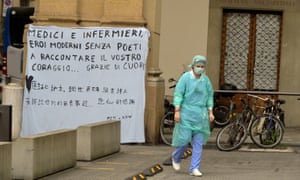
In our own time of less than stellar international political leaders and often strident, false reporting, it is something for us to think about. Once again, many brave ordinary citizens are quietly battling for those around them. There really is still great humanity out there.

  1. Time passes (we endure)

The Corona virus will “ground” us for weeks, if not months. It will be a time of many concerns and busy households. We could do a few jigsaws, watch endless Netflix TV, take up a new hobby or worry ourselves endlessly. Or we could let a few great writers show us wider vistas – and just how vivid and extraordinary the world and its people can be.

medici (1)

That’s why I will be reading War and Peace during the Corona virus.

What about you?

3 Questions to Ask When Writing a Book

As you put in those years (it will be years, sorry!) writing your book, it’s essential to repeatedly ask yourself three things.

  1. What’s it about?

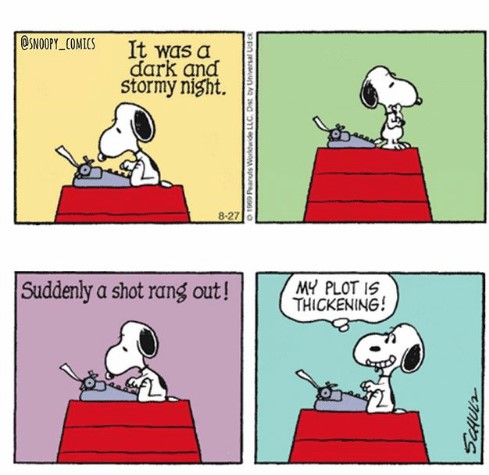
Don’t say “lots of stuff, it’s a fascinating story” and then struggle to explain. Most books can only “carry” at most two main threads. Stick to them. If this means you need to cut lots of well written text, do it. If you aren’t ruthless at this stage it will make the writing process endless. At the publication and promotion stages it may make you come across as lacking a compelling story or, for non-fiction, lacking in clear purpose.

snoopy-conts-it-was-a-dark-and-stormy-night-suddenly-27172989

     2. Who is your reader?

Some UK newspapers are famously reputed to have reader levels in mind. The Sun is written for an under 14 literacy level, the Daily Express for under 16 and the Telegraph and The Guardian for over 17.

This is eminently sensible because who your intended reader is will define the style and content of your book. Very specifically it determines your “voice”. Are you going to be humourous, informative, colloquial, authorative? How “tight” will your style be? Will it be Hemmingwayesque or Proustian?! Twitter pithy or Sunday supplement effusive?

During the writing of my books, I always reach a stage where I have one (or at most two) people in mind as my end reader. These are named people. Does he/she need this level of (historical/political/social/geographic) explanation? Is that reference too rarefied – or too obvious? Would he/she see the humour? How patient would he/she be with the pace of the narrative? Am I cutting too much – would the reader like more in this section?. Is this too long-winded? Am I adding something just because it’s an interesting detail but not related to the central story/ies?

writing-finished-new-record

     3. Are we there yet? (or when do I know it’s finished?)

Every writer fluctuates between the sense of being an undiscovered genius or an idiot for ever thinking they could put pen to paper. The truth probably lies somewhere in between. Writing a book, one you feel really holds together, is an endless process. So when is it “done”?

There’s no right answer here either, I’d suggest. I prefer to draw in (impose upon!) a trusted reader only when I think I can’t proceed without a fresh steer. Don’t waste the time of your good readers (invariably friends) if you want to call upon them again. Most friends, at best, will read your draft only once. Only the most dedicated will read it twice over your years of toil. So be smart and value their time and goodwill.

If you feel truthfully the text needs more work it’s almost certainly not ready to share. Are the sentences polished when you open a page at random? Does the text “sing” (at least to your ears) or are there still jagged sentences and paragraphs? If so, continue to write, edit, rewrite, edit and rewrite. Only then show it to your reader(s).

At some stage you must have the confidence to say (hand on heart!) “yes, this is good. And I’m prepared for anyone to read it without any long preamble or excuses. This is no longer ‘just a draft’. Rather ‘this is it’ (more or less). And in 5 years time I know I’ll feel the same about it too”.

If you feel you’ve done everything you can to prepare your “baby” for the real world, then most likely it’s ready. That’s when you should consider sending it out on its own two feet via a paid editor or indeed by directly contacting publishers. And that’s when another process altogether begins!

Joyce called a halt to his endless (re)writing and tinkering of Ulysses so it would be published by his 40th birthday. Writing is subjective. So is reading. Just as there’s no perfect book, so there’s no perfect way to know it’s “finished”.

So stick with it and enjoy your time with “baby” as you help it to grow and flourish!

Any other thoughts or helpful tips you’d have on this thorny subject please email is on paulmartinwriter@gmail.com


Recent Presentations – Dublin/Wicklow

In October and November 2019 it was a pleasure to do presentations and answer questions on the Bicycle Thief and the German Wife with four groups in south Dublin and Wicklow .

My thanks to Jetta and Linda in the U3A groups in Blackrock (Deansgrange) and Bray, to Gabrielle in the Dun Laoghaire Active Retirement Association and to Rosemary from the the Dalkey Women’s Group for their invitations.

If your association/group would like to include a presentation on this very moving family – and intriguing national – Italian story in your 2020 schedule, please contact me on paulmartinwriter@gmail.com.


UCD Book Presentation Event

My sincere thanks to Ass. Prof. Ursula Fanning, Ass. Prof. Eric Haywood, Melanie Pape and all in the UCD SLCL for hosting a wonderful event for “The Bicycle Thief and the German Wife” last week and to all who attended. Eric gave a very kind introduction to the book and was most engaging in his role as MC. The observations and experiences shared by Corinna Salvadori Lonergan, Professor Emerita of Italian, Trinity College Dublin, were particularly striking and memorable on this intriguing evening of discussion.

UCD 221019 Eric HaywardAss. Prof. Eric Haywood (with author) in the UCD School of Languages, Cultures and Linguistics.